
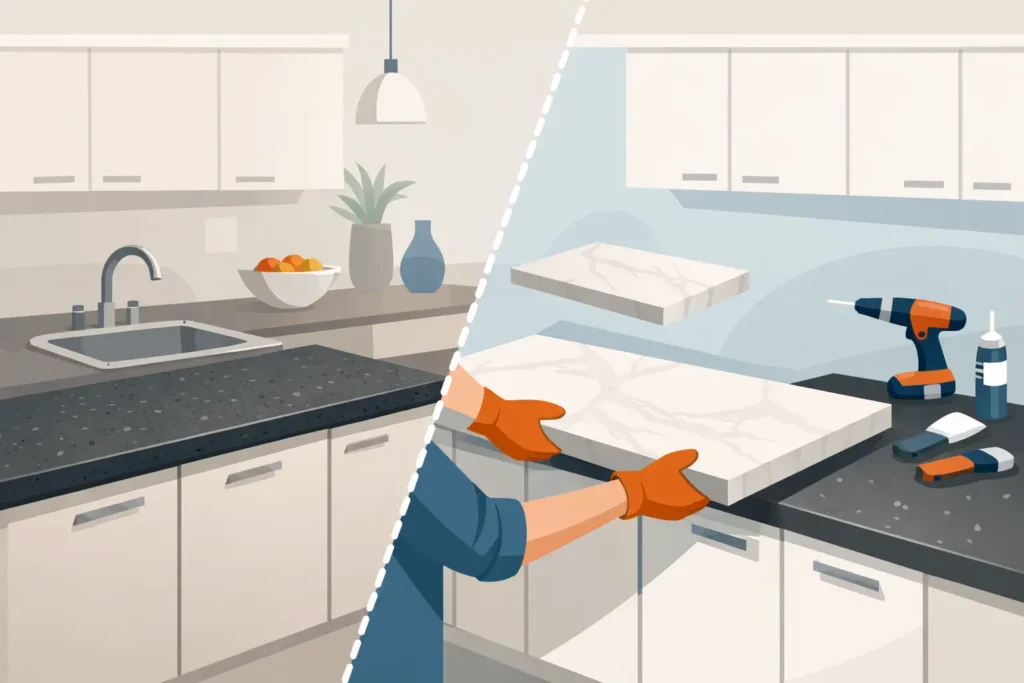
A dated countertop can make an otherwise solid kitchen feel tired, even when the cabinets are well built, properly aligned, and still suit the room. The good news is that you can replace countertops without replacing cabinets in many homes and commercial spaces. The key is understanding whether the cabinetry can support a new surface, then selecting an installation method that delivers the finish, performance, and budget you expect.
For homeowners planning a renovation, this approach can preserve a kitchen’s layout while creating a dramatic visual transformation. It can also avoid the demolition, plumbing adjustments, electrical work, and extended downtime that often come with a full cabinet replacement.
Can You Replace Countertops Without Replacing Cabinets?
Yes, provided the cabinet boxes are structurally sound and appropriately sized for the new countertop system. Countertops and cabinets are separate components. In a conventional installation, the countertop is secured to the cabinet bases, then sinks, faucets, backsplashes, and appliances are reconnected as required. The cabinets do not automatically need to be replaced simply because the countertop does.
This is especially worthwhile when cabinet doors are in good condition, the storage layout works well, and the boxes show no signs of major water damage, movement, or failure. Many older kitchens have exceptionally sturdy cabinet construction beneath surfaces that have become chipped, stained, swollen, or visually outdated.
The decision becomes more nuanced if cabinets are sagging, badly water-damaged around the sink, out of level, or too weak to carry a heavier stone slab. In those cases, repairing or replacing selected cabinet sections before upgrading the surface is the smarter long-term investment.
Start With the Cabinet Condition, Not the Countertop Color
A premium countertop finish deserves a stable foundation. Before choosing materials, a specialist should inspect the cabinet bases, particularly around the sink, dishwasher, corner units, and long countertop runs. These areas tend to reveal hidden moisture issues and structural movement first.
Look for doors that no longer close because the cabinet has shifted, soft or swollen particleboard, peeling laminate at the base, mildew odors, and persistent leaks under the sink. Minor issues, such as loose hinges or worn toe kicks, can usually be corrected without affecting the countertop project. Significant swelling or structural deterioration should be addressed before any new surface is installed.
Level matters, too. A countertop installed over uneven cabinetry can create problems with seams, sink drainage, backsplash alignment, and the appearance of the finished edge. A professional can shim, reinforce, or re-level cabinets where appropriate, allowing the new surface to sit correctly without turning the project into a full kitchen rebuild.
Choose the Right Countertop Upgrade Method
The best method depends on the current surface, desired look, condition of the cabinets, and how much disruption the property can accommodate. A complete slab replacement can be an excellent option, but it is not the only way to achieve a high-end result.
Remove and Install a New Countertop
If the existing countertop is severely damaged, poorly fitted, or no longer practical, removing it and fitting a new surface on the retained cabinets is a direct solution. Quartz, granite, solid surface, laminate, wood, and porcelain are common choices, each with different weight, care, and cost considerations.
Natural stone and thick engineered slabs can be heavy. Cabinets may need reinforcement, especially on large islands, spans around appliances, or older units with limited internal bracing. The sink, cooktop, faucet, and backsplash may also require removal and refitting, which adds time and labor to the project.
Resurface the Existing Countertop
When the existing countertop is stable, firmly attached, and free from major structural damage, resurfacing can offer a more efficient route to a luxury finish. Rather than removing the entire top, a specialist prepares the surface and applies a purpose-designed coating system.
A spray granite finish can transform worn laminate, tile, solid surfaces, and other suitable substrates into a refined, stone-inspired surface without the weight and disruption of a slab installation. The result is not simply a cosmetic cover-up. With correct preparation and professional application, the system is designed to provide a durable, waterproof, low-maintenance finish with an elevated texture and customized color profile.
This approach is particularly appealing where the cabinet layout is worth preserving, time is limited, or a property needs a substantial visual upgrade without unnecessary waste. Spray Granite Specialists uses tailored spray granite systems to create premium surface transformations while keeping the focus on craftsmanship, protection, and long-term performance.
Pair a Countertop Upgrade With a Cabinet Respray
If the cabinet boxes are strong but the doors look dated, consider coordinating the countertop work with a cabinet respray rather than replacing the entire kitchen. A new stone-effect surface paired with refreshed cabinetry can change the character of the room at a fraction of the disruption of a full refit.
This option works particularly well for rental properties, hospitality settings, offices, and homes where the layout functions perfectly but the finish no longer reflects the desired standard. Color selection is crucial. Warm neutrals, deep charcoal, soft greige, and contemporary mineral tones can create a cohesive result when chosen with flooring, wall color, and hardware in mind.
What Happens to the Sink, Backsplash, and Appliances?
Countertop work rarely exists in isolation. The sink and faucet usually need to be disconnected for a replacement countertop installation, while an integrated backsplash or tiled backsplash may need careful protection, removal, or refinishing. Cooktops can also need to be lifted and reset once the new surface is complete.
With resurfacing, the level of disruption is often lower, but the project still requires careful masking, surface preparation, and protection of adjacent fixtures. A professional installer will assess cutouts, edges, corners, drainboard areas, and the transition between countertop and wall before work begins. These details distinguish a surface that merely looks refreshed from one that feels fully finished.
It is wise to discuss whether you want to retain the existing sink before selecting a finish. Replacing an old sink during the same project can be efficient, but it may require changes to the cutout or cabinet plumbing. An undermount sink, for example, demands more planning than a standard drop-in model.
Cost, Timing, and the Trade-Offs to Consider
Keeping cabinets can reduce renovation costs significantly because it avoids purchasing new units and paying for broader demolition and installation work. It may also shorten the project timeline and reduce the chance of discovering additional repairs behind the cabinets.
However, the lowest upfront price is not always the best value. A thin, poorly installed overlay or a rushed DIY coating may peel, stain, chip, or fail around wet areas. Likewise, installing an expensive heavy countertop onto weak cabinets can create avoidable problems later. The right solution should match the demands of the space, including heat exposure, moisture, cleaning routines, and expected daily use.
For a busy family kitchen, durability and easy cleaning may take priority. In a guest bathroom vanity, a highly customized finish may be the deciding factor. In a commercial setting, hygiene, waterproofing, and resilience against regular use are often central to the specification. A professional assessment helps balance these priorities without overbuilding the project.
How to Plan a Successful Countertop Transformation
Begin by deciding what you want to change and what you want to preserve. If you love the layout and storage but dislike the finish, retaining the cabinets makes practical sense. Take note of cabinet condition, countertop damage, sink type, backsplash details, and any areas exposed to ongoing moisture.
Next, compare a full countertop replacement with resurfacing based on the condition of the existing top. Ask about surface preparation, edge treatment, waterproofing, care requirements, cure time, and warranty or quality assurance. A trusted installer should explain where a system is suitable and where it is not, rather than pushing one approach for every project.
Finally, view the countertop as part of the whole room. The best transformations consider cabinetry, wall finishes, hardware, lighting, and the way the surface will be used every day. When the foundations are sound, you do not need to tear out a functional kitchen to give it the premium finish it deserves.