
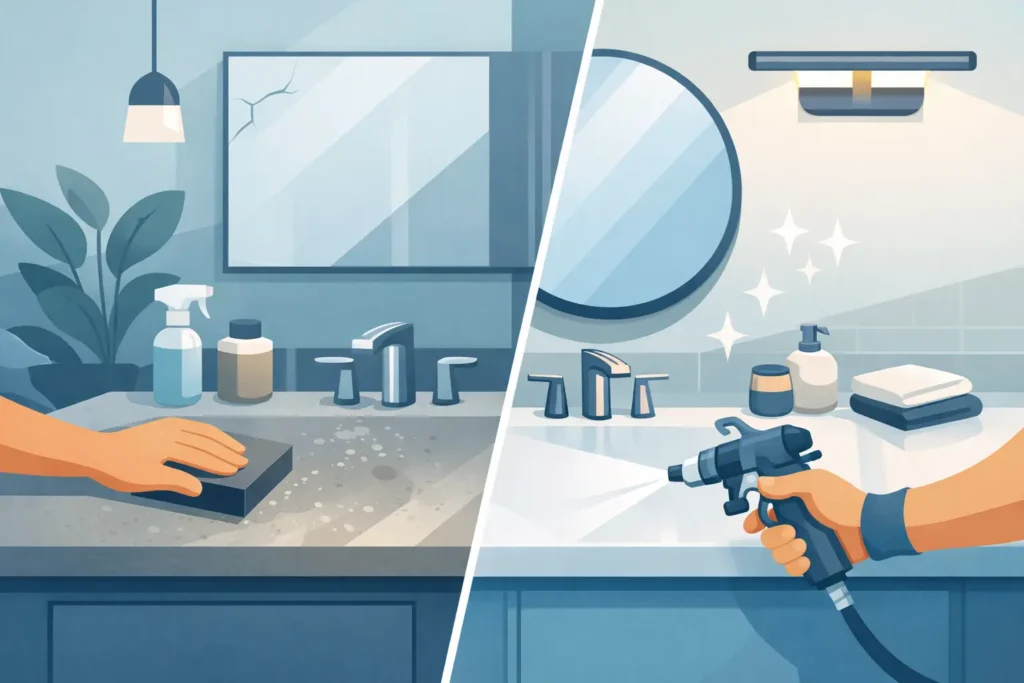
A tired vanity can drag down an entire bathroom, even when everything else is clean, current, and well designed. Bathroom vanity resurfacing changes that fast. Instead of tearing out cabinets, countertops, and sink surrounds that are still structurally sound, resurfacing upgrades the visible surface with a fresh, premium finish that looks intentional, refined, and built for daily use.
For homeowners and property renovators, that matters because the vanity is one of the first things people notice. It anchors the room visually, handles constant moisture, and takes more day-to-day wear than many other surfaces. When the finish is chipped, dated, stained, or simply no longer suits the space, resurfacing can deliver a dramatic transformation without the cost and disruption of a full replacement project.
What bathroom vanity resurfacing really involves
Bathroom vanity resurfacing is the process of restoring and upgrading an existing vanity surface rather than removing and replacing it. Depending on the condition and material, the work may include surface preparation, repairs to minor imperfections, priming, and the application of a new specialist coating or textured finish designed to improve both appearance and performance.
This is not the same as a quick paint-over. A professional resurfacing system is built around adhesion, durability, and moisture resistance. In a bathroom environment, that distinction is critical. Steam, splashes, cleaning products, cosmetics, and regular contact all put pressure on the finish. If the wrong materials or methods are used, the result may look acceptable at first and fail quickly afterward.
A specialist-applied finish can give the vanity a completely new visual identity, whether the goal is a stone-inspired surface, a cleaner contemporary look, or a more luxurious design statement. For many clients, the appeal is simple: keep the functional base, transform the surface, and avoid the downtime of a full rip-out.
Why bathroom vanity resurfacing appeals to modern renovation projects
In most bathrooms, replacement is the most expensive way to fix a cosmetic problem. If the vanity cabinet is stable and the layout works, replacing the whole unit often means paying for demolition, disposal, plumbing adjustments, installation, and finishing work around the vanity itself. That can quickly turn a straightforward refresh into a larger renovation.
Bathroom vanity resurfacing offers a more efficient route. It reduces waste, shortens disruption, and allows property owners to achieve a high-end finish without rebuilding the room around it. That is especially attractive when timelines matter, whether for a family home, a rental property, or a commercial washroom that needs to stay presentable and functional.
There is also a design advantage. Resurfacing can modernize a vanity without forcing every other element in the bathroom to change. If the tile, flooring, mirrors, or fixtures still work well, updating the vanity surface may be enough to pull the whole room forward.
Where resurfacing performs best
The best candidates for resurfacing are vanities that are structurally solid but visually worn. That includes surfaces with fading, minor scratches, old-fashioned finishes, staining, or a style that no longer matches the rest of the interior. It is particularly useful when the shape and layout of the vanity still make sense, but the finish is holding the room back.
That said, resurfacing is not the right answer for every project. If the vanity has severe water damage, swelling, loose structural components, or underlying material failure, replacement may be the smarter investment. A trustworthy specialist should be honest about that. The goal is not to force resurfacing onto every vanity, but to apply it where it delivers genuine value.
This is where experience matters. An expert assessment can tell the difference between a surface that needs restoration and one that has reached the end of its service life.
The value of spray granite finishes for vanity upgrades
For clients who want a more elevated result, spray granite finishes offer a compelling alternative to standard refinishing. Rather than leaving the vanity with a flat, painted appearance, a specialist spray granite system creates a textured, stone-inspired surface with visual depth and a more premium presence.
The appeal is not only aesthetic. In bathroom settings, the right finish also needs to work hard. A professionally installed spray granite surface can be durable, waterproof, hygienic, and well suited to high-use environments. That makes it especially relevant for vanities, wet rooms, and bathrooms where performance matters as much as appearance.
This combination of luxury styling and practical resilience is what makes resurfacing such a strong option for both residential and commercial spaces. When applied correctly, it can help the vanity feel more custom, more current, and more aligned with the rest of a well-designed bathroom.
What to expect from the process
A professional bathroom vanity resurfacing project usually begins with inspection and preparation. The existing surface must be thoroughly cleaned, repaired where needed, and prepared to accept the new coating system. This stage is where long-term results are often won or lost. Good preparation supports adhesion, finish consistency, and durability.
Once the vanity is ready, the resurfacing system is applied in controlled stages. The exact process depends on the substrate and the desired finish, but the aim is the same: create a surface that looks refined and performs reliably in a moisture-heavy environment.
Compared with replacement, the process is typically faster and less invasive. There is less demolition, less mess, and fewer follow-on trades involved. For many clients, that alone is a major advantage. You still get a substantial visual transformation, but without turning the bathroom into a construction zone for an extended period.
Design flexibility matters more than most people think
A vanity is a practical fixture, but it also carries a lot of the bathroom’s design weight. The finish you choose affects how the whole room feels. A lighter tone can make a compact bathroom feel more open. A darker or more textured surface can add contrast and sophistication. Stone-inspired finishes can help bring a sense of permanence and quality to a room that otherwise feels basic.
This is one reason resurfacing has become more attractive than standard repainting. With specialist systems, you are not limited to a generic one-note finish. You can create a surface that feels more tailored to the property, whether the look is contemporary, understated, or more luxurious.
Customization also matters in commercial settings. Hotels, offices, salons, and other customer-facing properties need surfaces that support brand presentation while standing up to frequent use. A vanity finish that looks high-end and wears well can quietly improve the entire perception of the space.
Performance is not a bonus – it is the point
Bathrooms are unforgiving. Moisture gets into weak finishes. Daily cleaning exposes surfaces to chemicals. Heat, steam, soap residue, and constant touch all add up. If a resurfaced vanity looks good but cannot handle that environment, it is not a successful upgrade.
That is why premium resurfacing should always be judged on more than appearance. Durability, water resistance, hygiene, and ease of maintenance are central to the value of the project. A properly installed surface should not only refresh the room but make it easier to live with over time.
For many property owners, this is where specialist installation earns its place. Professional systems are designed to do more than imitate a luxury material. They are built to perform in real conditions, which is ultimately what protects the investment.
Choosing the right partner for bathroom vanity resurfacing
Not all resurfacing services deliver the same result. The difference often comes down to materials, preparation standards, technical skill, and finish quality. A vanity sits at eye level, so flaws show quickly. Inconsistent texture, weak adhesion, poor edge detailing, and rushed prep work all compromise the final outcome.
When comparing providers, look for a company that treats resurfacing as a specialist service rather than a quick cosmetic fix. Experience across bathrooms and wet areas is particularly important, because these spaces demand finishes that can handle water exposure without sacrificing style.
A trusted specialist should also be able to guide the design direction, explain the realistic lifespan of the finish, and recommend the right solution based on the condition of the existing vanity. That kind of advice protects clients from false economy and helps ensure the finished result feels genuinely premium.
At its best, bathroom vanity resurfacing is not a shortcut. It is a smarter renovation strategy – one that preserves what still works, upgrades what no longer does, and delivers a cleaner, more luxurious finish with far less disruption. When the right surface system meets the right installer, the result is not just a refreshed vanity. It is a bathroom that feels more considered, more valuable, and far better suited to the way the space is used every day.