
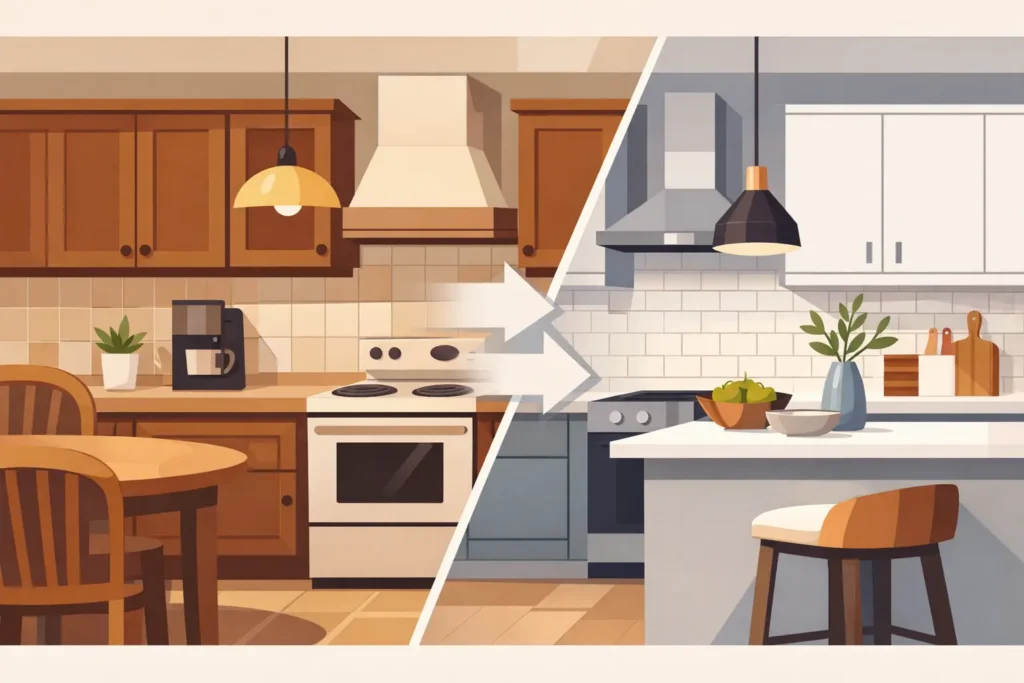
A kitchen can be perfectly functional and still make the entire property feel stuck in another decade. Worn countertops, faded cabinet doors, cracked tile, and dated color combinations can undermine an otherwise well-kept home. Learning how to modernize dated kitchens is not always about demolition or installing an entirely new kitchen. With the right surfaces, finishes, and design decisions, it is possible to create a luxury result with far less disruption.
For homeowners, renovators, and commercial property owners, the strongest upgrades focus on the elements people see and touch every day. Cabinets, countertops, backsplashes, hardware, lighting, and wall finishes carry most of the visual weight. Refresh those areas strategically, and a tired kitchen can feel refined, current, and significantly more valuable.
Start by Identifying What Actually Dates the Kitchen
Before choosing a new color palette or booking any work, take an honest look at what makes the room feel old. In many kitchens, the layout is still practical. The problem is often the finish rather than the structure.
Dark wood cabinet doors, heavily patterned laminate, chipped worktops, stained grout, and small tiled backsplashes are common signs of a dated kitchen. So are yellowed walls, mismatched metals, and lighting that creates harsh shadows rather than a warm, inviting atmosphere. These details can make a space feel smaller and less clean, even when it is maintained properly.
It helps to separate cosmetic issues from functional ones. If cabinets are solid, appliances work well, and the room layout supports how you cook and entertain, a full replacement may not deliver the best return. Resurfacing and targeted upgrades can often create the same visual transformation while preserving a much larger portion of the budget.
Modernize Dated Kitchens by Updating the Main Surfaces
Countertops and cabinet fronts are typically the most influential surfaces in a kitchen renovation. They occupy a large visual area, receive daily use, and set the standard for the rest of the room. If they look worn, the kitchen will feel dated regardless of how many accessories are changed.
Refresh Cabinets Instead of Automatically Replacing Them
Cabinet replacement can be costly, particularly when it involves removing countertops, adjusting plumbing, repairing walls, and fitting new units. If your existing cabinets are structurally sound, a professional respray can offer a more efficient route to a modern finish.
Neutral painted cabinetry remains a reliable choice, but neutral does not have to mean plain. Warm white, soft greige, mushroom, charcoal, deep navy, and muted olive can all create a more considered look. The best option depends on the room’s natural light, floor finish, and the tone of the countertop.
For smaller kitchens, lighter cabinet colors usually help reflect light and create a more open feel. Larger spaces can carry richer colors, especially when paired with light counters or a contrasting island. A professional finish matters here. Uneven paint, visible brush marks, or poor preparation can make an update look temporary rather than premium.
Upgrade Countertops for the Biggest Visual Return
A dated countertop can pull down an entire kitchen. Cracked laminate, old-fashioned speckled patterns, burn marks, and damaged edges can make even newly painted cabinets look unfinished.
Spray granite resurfacing offers a compelling alternative where replacement is unnecessary or impractical. It can transform existing worktops with the visual character of granite while avoiding the cost, waste, and disruption associated with tearing out usable surfaces. A professionally applied spray granite finish can also deliver a hard-wearing, waterproof, low-maintenance surface designed for real kitchen use.
This approach is especially valuable when the goal is to achieve a luxury stone appearance without committing to a full countertop replacement project. Color and texture options allow the finish to work with a range of styles, from crisp contemporary kitchens to warmer, more traditional spaces being brought up to date.
The trade-off is simple: resurfacing is ideal when the base surface is stable and suitable for preparation. If countertops are severely swollen, structurally damaged, or poorly installed, replacement may still be the more sensible long-term decision. A specialist assessment helps determine which option will deliver the best result.
Replace a Busy Backsplash With a Cleaner Finish
Backsplashes have changed dramatically in the last decade. Small decorative tiles, strong border patterns, and dark grout lines can make a kitchen look more fragmented than it needs to be. Modern kitchens tend to favor cleaner, more continuous finishes.
A resurfaced backsplash or a simple large-format look can create a calmer backdrop for cabinetry and countertops. Choose a finish that supports the worktop rather than competing with it. If the countertop has visible texture or stone movement, a quieter backsplash often creates the most polished result. If the countertop is understated, the backsplash can introduce gentle texture or a complementary tone.
Bring the Color Palette Into the Present
Modern kitchens are not defined by one color. What matters is balance. Strongly contrasting finishes, overly yellow creams, and too many competing wood tones can make the room feel tied to a particular era. A tighter palette creates a more intentional impression.
Start with two dominant finishes and one accent. For example, warm off-white cabinets, a stone-inspired gray countertop, and brushed brass hardware can feel elegant without being overly formal. Alternatively, soft taupe cabinetry, a darker spray granite worktop, and matte black details create a more tailored, contemporary look.
Avoid selecting finishes in isolation. Take samples into the kitchen and look at them in morning, afternoon, and evening light. Colors that appear crisp in a showroom can look cold under your existing lighting. The goal is not to follow every passing trend, but to choose finishes with enough flexibility to remain attractive for years.
Change the Details That Signal Age
Once the major surfaces are addressed, smaller details become much more effective. Old handles, dated faucets, switch plates, and pendant lights can quickly reveal a kitchen’s age. These items are comparatively simple to replace, but they should be chosen as part of the overall finish scheme.
Brushed nickel, brushed brass, matte black, and stainless steel all have a place in a modern kitchen. The key is consistency. Mixing several metal finishes can work in a carefully designed space, but it can also look accidental. For most renovations, selecting one primary metal and repeating it across cabinet hardware, faucets, and lighting creates a cleaner result.
Lighting deserves particular attention. Replace a single harsh ceiling fixture with layered lighting where possible: practical task lighting over work areas, ambient ceiling light, and decorative pendants over an island or dining zone. Under-cabinet lighting is especially effective because it highlights refreshed countertops and makes food preparation easier.
Improve Function Without Rebuilding the Room
A visually modern kitchen should also feel easier to use. This does not always require moving plumbing or changing the layout. Small improvements can deliver meaningful everyday benefits.
Consider adding pull-out organizers, internal drawer dividers, recycling storage, or a dedicated charging drawer. Replace a bulky freestanding microwave with a more discreet solution if the layout allows. If appliances are still reliable but visually mismatched, updating visible elements such as handles, trim, or surrounding panels can help create a more coordinated appearance.
For rental properties and commercial settings, prioritize finishes that are durable, easy to clean, and able to withstand frequent use. A beautiful kitchen that is difficult to maintain will quickly lose its appeal. Hard-wearing, water-resistant, hygienic surfaces provide practical reassurance while supporting a premium visual standard.
Know When a Full Replacement Is Worth It
Resurfacing and cosmetic renovation are powerful options, but they are not the right solution for every kitchen. A full replacement may be justified when cabinets are failing, moisture damage is extensive, storage is seriously inadequate, or the layout no longer supports the property owner’s needs.
The most successful renovation decisions are based on condition, budget, and intended use. A homeowner preparing to sell may benefit most from a high-impact surface refresh. A family planning to stay for many years may choose to combine resurfacing with upgraded storage and appliances. A commercial property owner may place greater value on durability, hygiene, speed of installation, and minimal downtime.
A dated kitchen does not need to remain a source of compromise. When quality preparation, premium surface finishes, and thoughtful design work together, the result can feel like a complete transformation while retaining the practical structure already in place. Start with the surfaces that shape the room most, choose finishes built for daily life, and let the kitchen reflect the standard you want the rest of the property to carry.