
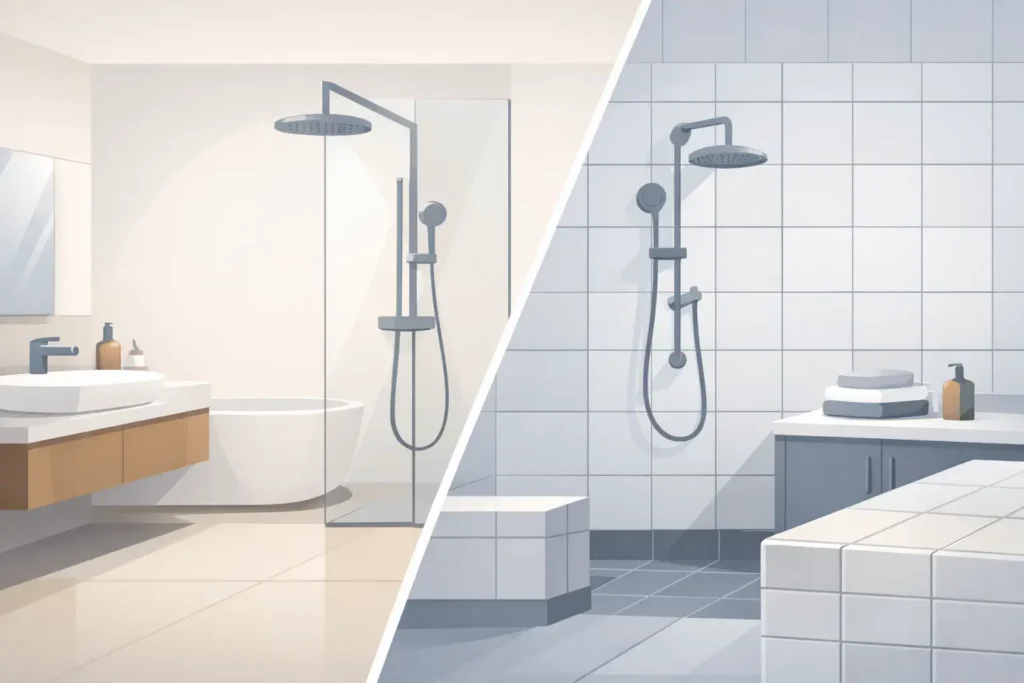
A bathroom can look freshly renovated yet still feel hard to keep clean if its grout lines are already catching soap residue, moisture and limescale. That is why seamless bathrooms versus tile grout is a worthwhile comparison for homeowners, landlords and property professionals planning a modern update. The choice affects far more than the look of the room: it shapes cleaning routines, long-term maintenance, renovation disruption and the overall sense of quality.
Traditional tiles remain a practical and attractive choice in many bathrooms. However, a professionally applied continuous surface can create a very different finish, particularly where a cleaner, more contemporary appearance is the goal. The right answer depends on the condition of the existing bathroom, the areas being updated and how the space is used every day.
Seamless Bathrooms Versus Tile Grout: What Changes?
The principal difference is the number of joints. A tiled wall or floor is made up of individual sections, with grout filling the gaps between them. Those grout lines are functional, but they are also the areas most likely to hold onto moisture, body-care products and everyday dirt.
A continuous sprayed finish is designed to reduce visible joins across a prepared surface. It can be used to transform suitable bathroom walls, tiles, vanity units and wet-room areas, creating a more unified appearance without the visual grid of traditional grout lines. When specified and applied correctly for the setting, it provides a smooth, easy-to-maintain surface that complements modern bathrooms particularly well.
This is not an argument that every tiled bathroom should be removed or covered. Good-quality tiles can last for many years, and some designs deliberately use grout as part of their character. The question is whether the existing finish still suits the property and the practical demands placed on it.
Cleaning: Where Grout Usually Demands More Attention
Grout is naturally more textured and porous than a smooth coated surface. In busy family bathrooms, rental properties and commercial washrooms, this can make it the first area to discolour or look tired. Even with regular cleaning, grout may gradually develop staining, soap build-up or uneven colour, especially around showers, baths and basins.
A continuous bathroom finish has fewer interruptions for dirt to settle into. This does not mean it requires no care – every bathroom surface benefits from sensible cleaning and ventilation – but routine maintenance is generally simpler. A soft cloth and appropriate non-abrasive bathroom cleaner are usually enough to keep the finish looking smart, rather than requiring concentrated effort along every joint.
For landlords and holiday-let owners, that difference can be particularly useful. A bathroom that is straightforward to clean between occupancies is easier to present well and can maintain a more polished appearance over time.
Hygiene and moisture management
No bathroom surface can compensate for poor ventilation, persistent leaks or failing seals. Moisture must still be managed properly, and the room should be assessed before any refinishing work begins. Existing movement, damaged tiles, loose grout or water ingress need professional attention rather than simply being hidden beneath a new finish.
Where the substrate is sound and preparation is meticulous, a professionally applied bathroom coating can provide a durable, waterproof finish where appropriate. The reduced number of joints also removes one of the usual places where grime can collect. This creates a practical advantage without making exaggerated promises about maintenance-free bathrooms.
Appearance: Clean Lines or Decorative Detail?
Grout has a strong visual influence. Contrasting grout can make a feature of geometric tiles, while colour-matched grout can soften the pattern. In heritage homes, period-style bathrooms or spaces where texture is part of the design, this detail may be exactly what the room needs.
For a more contemporary result, continuous finishes offer a calm, uninterrupted backdrop. They can make compact bathrooms feel more open, help awkwardly shaped spaces look more considered and bring dated tile colours into a more current palette. Bespoke colour matching also gives designers and homeowners greater freedom to coordinate walls, vanity units, splash zones and other surfaces.
The best option is often guided by the wider scheme. If the aim is a striking tile pattern, grout remains part of the design. If the aim is a refined, hotel-inspired room with minimal visual clutter, a sprayed surface may be the better fit.
Durability Depends on Preparation, Not Just the Finish
A bathroom is not a forgiving environment. It experiences heat, steam, water splashes, cleaning products and repeated daily use. That makes preparation the foundation of any long-lasting result.
With tiles, durability depends on sound adhesion, intact grout and properly maintained sealant around baths, showers and basins. A single cracked tile or failed joint does not always mean a full replacement is necessary, but it should be investigated before cosmetic work proceeds.
With a sprayed bathroom surface, the same principle applies: the existing substrate must be stable, clean and correctly prepared. Professional refinishing is a detailed process, not a quick cover-up. Surfaces need to be assessed, repaired where suitable, prepared carefully and finished using premium coating systems designed for the intended environment. This is what helps deliver an even, factory-quality appearance with the resilience needed for everyday use.
At Spray Granite Specialists, more than 22 years of professional spray finishing experience informs that assessment. Honest advice matters because not every surface, layout or moisture issue calls for the same solution.
Renovation Disruption: Restoring Rather Than Removing
Full retiling can involve stripping out existing materials, dealing with dust and waste, allowing for repairs to walls beneath, then fitting and grouting new tiles. It can be the right route where the room needs major layout changes or where the underlying surfaces are beyond restoration. However, it is rarely a small undertaking.
Refinishing suitable existing surfaces offers a different route. It can transform the colour, finish and overall feel of a bathroom while retaining much of what is already in place. This reduces the need for unnecessary removal and can be particularly valuable where clients want to update a property without the disruption of a complete rip-out.
That benefit matters in occupied homes, rental properties and commercial settings where downtime has a real impact. A professional survey should establish what can realistically be restored, what needs repairing and whether any areas require a different approach for lasting performance.
Cost and Value Are Not the Same Question
It is tempting to compare only the initial outlay of regrouting, retiling or refinishing. Yet the more useful comparison includes the scope of work around each option. Tile replacement may bring additional costs for removal, disposal, replacement boards, plumbing alterations or redecoration. It can also create more disruption for the people using the property.
A professional surface transformation can provide strong value where existing tiles or bathroom fixtures are structurally sound but visually dated. It gives homeowners and property managers the opportunity to create a luxury finish without automatically replacing serviceable materials.
Value should still be judged on suitability, workmanship and expected use. A heavily damaged bathroom needs a different conversation from a bathroom with sound tiles and tired grout. The best recommendation is the one that protects the property and gives the client a finish they will be happy to live with.
When Tile Grout Is Still the Better Choice
Continuous finishes are not intended to erase every tiled design. New-build projects may need tile systems specified from the start, and feature walls often benefit from the depth and pattern that tile and grout provide. A small area of decorative tiling can also sit beautifully alongside a smoother, more restrained finish elsewhere in the room.
Tile grout may also be the sensible choice where a bathroom requires localised repairs or where retaining a particular material is central to the design. The key is to choose a grout colour, tile format and maintenance plan that fit the practical reality of the room, rather than selecting solely from a showroom display.
A bathroom should work hard without looking hard to maintain. Whether the room calls for retained tiles, refreshed grout or a professionally refinished continuous surface, start with the condition of what is already there. A careful assessment turns a surface decision into a lasting transformation rather than a short-term cosmetic change.