
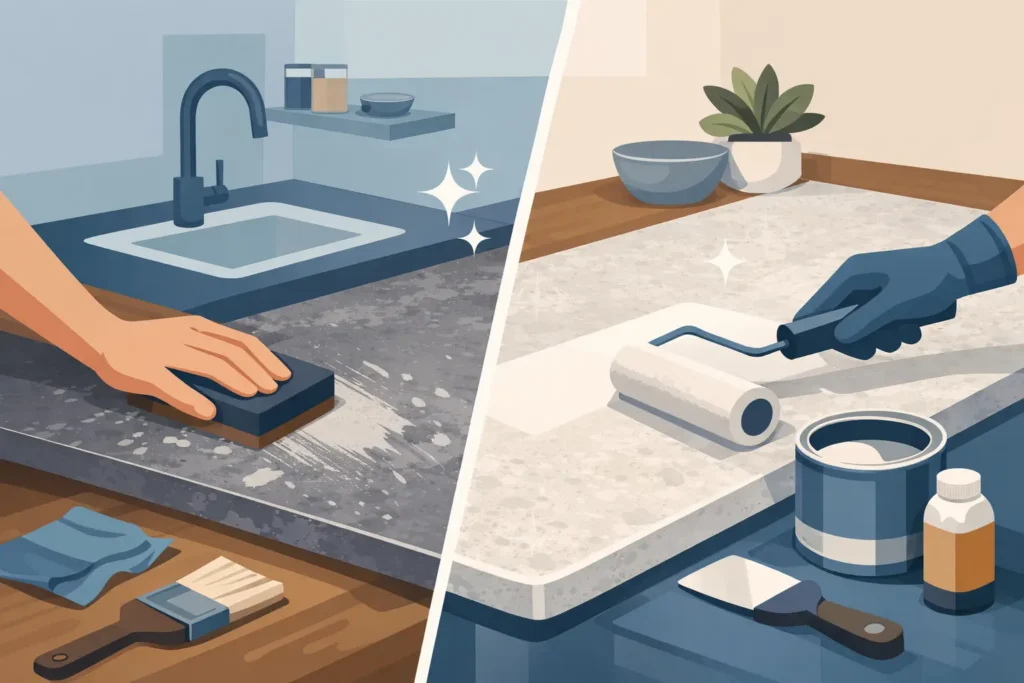
A tired laminate countertop can make an otherwise well-planned kitchen feel dated, even when the cabinets, appliances, and layout still work perfectly. Learning how to resurface laminate worktops gives you a practical alternative to replacement: a refreshed, high-end surface without removing cabinetry, disconnecting plumbing, or taking the kitchen out of action for weeks.
The right resurfacing system can do much more than cover an old pattern. It can create a stone-inspired finish with improved resistance to daily wear, moisture, stains, and cleaning products. The result depends on preparation, material choice, and professional application – especially around sinks, seams, edges, and heat-exposed areas.
First, decide whether your worktop is suitable
Most laminate worktops can be resurfaced when the substrate beneath the laminate is stable and dry. Surface scratches, fading, minor chips, and outdated colors are usually cosmetic problems, which makes them excellent candidates for renovation.
However, resurfacing should not be used to hide a structural failure. If the core is swollen from water damage, the laminate is lifting across large areas, or the worktop flexes when pressure is applied, replacement may be the safer investment. A new finish needs a firm foundation. Applying it over damp or damaged particleboard risks trapping the problem beneath a surface that may later crack, lift, or fail around the sink.
Pay particular attention to the sink cutout and the joint between two countertop sections. These are the areas most likely to have absorbed water over time. Small localized issues can sometimes be repaired and sealed before resurfacing, but widespread swelling calls for a more substantial solution.
Choose a finish that performs, not just one that photographs well
There are several ways to resurface laminate worktops, and the best choice depends on how the kitchen is used. Decorative adhesive films are quick and inexpensive, but they can be vulnerable at edges and around heat. Countertop paint can provide a short-term color update, although it may show wear quickly in busy kitchens if the coating system is not designed for countertops.
Epoxy coatings create a glossy, dramatic appearance but require careful mixing, controlled conditions, and enough curing time. They can also be difficult to repair invisibly if damaged. For homeowners and property managers seeking a premium stone-style transformation, a professionally applied spray granite system offers a more balanced option. It delivers the visual depth and texture associated with granite while avoiding the cost, weight, and disruption of installing stone slabs.
A quality spray granite finish is designed as a complete system rather than a single coat of paint. It can be customized in color and texture, then sealed to create a waterproof, hygienic, easy-clean surface. This makes it particularly appealing for kitchens, utility rooms, bathroom vanities, and commercial refresh projects where appearance and practical performance need to work together.
How to resurface laminate worktops with a spray granite system
Professional resurfacing is methodical because each stage affects adhesion and longevity. Rushing the preparation is the most common reason a renewed worktop disappoints later.
1. Inspect, repair, and protect the surrounding area
The worktop is checked for movement, moisture damage, loose edging, open seams, and previous silicone residue. Minor chips and small dents are filled with a suitable repair compound, then leveled so they do not telegraph through the finished surface.
Cabinets, walls, flooring, appliances, and fixtures are carefully masked. Sink and cooktop openings may need additional protection or temporary removal depending on the project. Proper containment matters: a luxury surface should not come at the expense of overspray on surrounding finishes.
2. Deep-clean and decontaminate the laminate
Laminate often carries invisible layers of grease, polish, cleaning product residue, and cooking oils. Even a worktop that looks clean can have enough contamination to interfere with adhesion.
The surface is thoroughly cleaned with a suitable degreasing process, particularly around the backsplash, sink, handles, and food-preparation areas. Silicone must be removed completely from joints and edges. New sealant is applied only after the resurfacing process is complete and the finish has cured as specified.
3. Create the correct surface profile
Laminate is smooth and non-porous, so it must be mechanically prepared to give the coating system a secure key. This usually involves controlled sanding or abrasion rather than aggressive grinding. The goal is to dull the existing surface evenly, not to damage the laminate or expose the core material beneath.
Dust is then removed in full. Any remaining powder, grease, or glossy patches can compromise the finish. This stage may seem unglamorous, but it is where professional craftsmanship makes the largest difference to long-term durability.
4. Apply the bonding and spray granite layers
A specialist bonding primer is applied first to support adhesion between the laminate and the decorative system. Once it reaches the correct stage, the spray granite material is applied evenly to build a natural, stone-inspired surface.
This is where customization comes into its own. A subtle light gray finish can modernize a compact kitchen without making it feel cold. Warmer taupe, charcoal, black, or speckled stone effects can complement wood cabinetry, painted cabinets, or commercial interiors. Texture can also be adjusted to suit the desired appearance and cleaning requirements.
The application must remain consistent across long runs, corners, edge profiles, and seams. A professional installer works to maintain a balanced pattern, avoiding heavy patches, thin coverage, or visible transitions that make a resurfaced countertop look like a shortcut.
5. Seal for water resistance and everyday use
The final protective coats help give the surface its practical value. A properly specified sealer supports resistance to moisture, staining, cleaning, and routine abrasion while making the surface easier to maintain.
Edges near the sink, faucet base, backsplash joint, and worktop joins deserve special attention. Water finds weak points quickly. Once the finish has cured, these transitions should be sealed correctly to prevent moisture reaching the underlying laminate core.
Curing time varies by system and site conditions. The worktop may feel dry before it has reached full service strength, so follow the installer’s guidance before placing appliances back, cleaning heavily, or returning to normal food-preparation use.
What to expect from cost, timing, and durability
Resurfacing is usually less disruptive and more cost-effective than removing and replacing countertops, particularly when the existing cabinets are in good condition. It also avoids the extra work that can follow a replacement project, such as repairing backsplashes, refitting sinks, or altering plumbing connections.
The exact price depends on countertop size, edge detail, repairs, access, the selected finish, and whether a backsplash or nearby surfaces are included. A simple straight run in sound condition takes less preparation than a large kitchen with multiple seams, integrated drainboards, damaged areas, and complex cutouts.
Durability depends on the coating system and how the countertop is treated afterward. Even a premium resurfaced finish is not an invitation to chop directly on the surface, drag cast iron pans across it, or place hot cookware down without a trivet. Use cutting boards, wipe up spills promptly, and avoid harsh abrasive pads or highly aggressive cleaners. These habits protect the finish and preserve its appearance for longer.
When professional installation is the better choice
A capable DIY homeowner may manage a basic countertop paint project, but spray-applied stone finishes demand equipment, ventilation control, product knowledge, and experience with surface preparation. The work is especially technical when it involves sink areas, long countertop runs, integrated backsplashes, or commercial spaces where downtime and finish consistency matter.
Professional installation also provides clearer accountability for the completed surface. At Spray Granite Specialists, the focus is on tailored surface transformation, combining carefully prepared substrates, customizable stone-effect finishes, and quality-controlled application for a result that feels considered rather than cosmetic.
If your laminate worktop is structurally sound but visually past its best, resurfacing can be the moment your kitchen stops looking like a compromise. Choose a finish designed for real daily use, and give the preparation and application the same attention you would expect from the final reveal.