
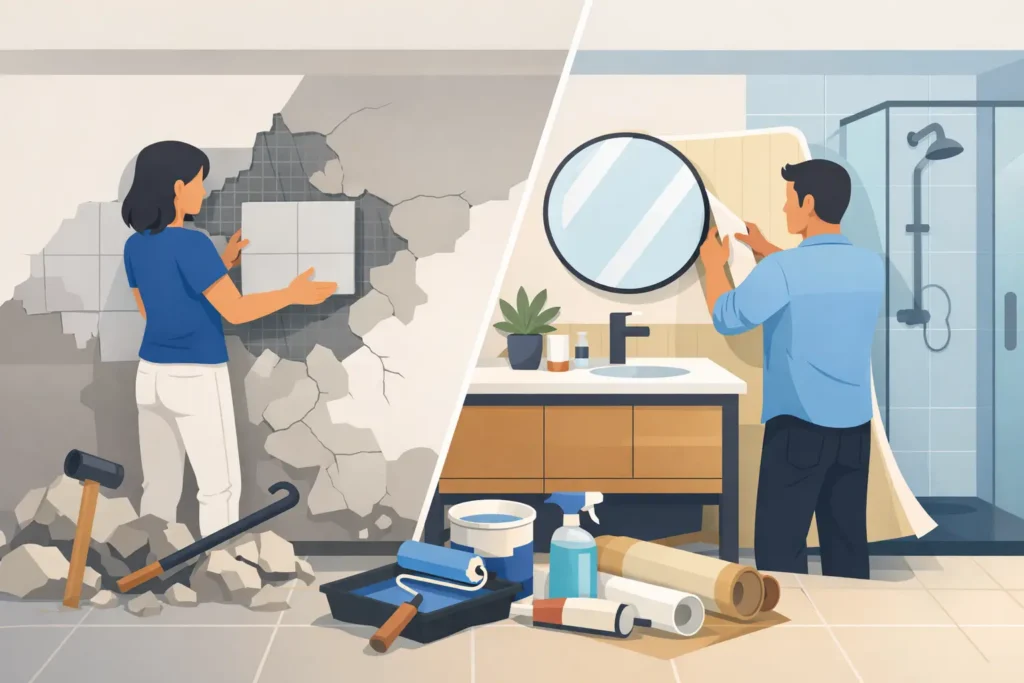
A dated bathroom does not always need to be stripped back to bare walls to feel completely new. This bathroom renovation guide without demolition explains how existing tiles, vanity units and fitted surfaces can be professionally restored when the underlying room is sound – creating a cleaner, more contemporary result without the usual noise, dust and upheaval of a full refit.
For homeowners, landlords and commercial property managers, the appeal is straightforward. A bathroom can be one of the most disruptive rooms to renovate because it is compact, heavily used and full of fixed plumbing. When the layout works and the surfaces are structurally stable, refinishing can preserve what is already there while changing the colour, texture and overall standard of the space.
Start with the condition, not the colour
The first question is not whether you dislike the tiles. It is whether the bathroom is a suitable candidate for surface restoration.
Professional spray finishing works best where existing surfaces are secure, dry and in reasonable condition. Sound ceramic tiles, bathroom vanity units, cabinets, splashbacks and selected wet-area surfaces can often be transformed rather than removed. This avoids the chain reaction that demolition can cause: broken tiles, damaged plaster, replacement boards, plumbing alterations and days or weeks without a functioning bathroom.
However, restoration is not a cover-up for underlying faults. Persistent leaks, loose or cracked substrates, failed seals, water damage or movement behind tiles need to be addressed first. If a shower enclosure is leaking into the wall or a floor has deteriorated beneath the finish, demolition and repair may be the responsible route. Honest advice should always separate a cosmetic transformation from work that requires remedial building repairs.
What can be transformed without demolition?
The scope depends on the bathroom and its existing materials, but many of the surfaces that make a room feel tired are the ones that can be professionally refinished.
Tiles and wall surfaces
Old-fashioned tile colours, contrasting borders and grout-heavy walls can date a bathroom long before the fittings fail. With thorough cleaning, repair where appropriate and meticulous preparation, tiled surfaces can be spray finished in a modern colour chosen to suit the room. The result can make the walls feel more unified, particularly in smaller bathrooms where multiple tile colours create visual clutter.
A softer neutral can bring a calmer, spa-inspired feel, while deeper tones can give a cloakroom or feature wall more character. Colour choice should consider the room’s natural light, existing sanitaryware and whether the property is intended for personal use, rental or resale.
Vanity units and fitted furniture
A well-built vanity unit may be perfectly functional even when its doors, panels or colour no longer suit the bathroom. Replacing it can also mean disconnecting plumbing, sourcing a unit that fits the same footprint and making good surrounding finishes.
Professional respraying allows existing furniture to be updated in a carefully selected colour and sheen. It is particularly useful for bespoke, fitted or awkwardly sized units, where replacement may compromise storage or create unnecessary extra work. A smooth, durable sprayed finish can give tired furniture a far more considered appearance than its original factory coating.
Splashbacks, bath panels and details
Smaller surfaces have an outsized effect on how finished a bathroom feels. Splashbacks, bath panels and selected decorative elements can be brought into the same colour scheme to create continuity. This is often where a renovation without demolition looks most intentional rather than simply refreshed.
The best approach is not always to coat every surface in one shade. A balanced scheme may use a light wall finish with a contrasting vanity, or a stone-inspired decorative surface as a focal point. The aim is a cohesive room that still has depth.
Wet rooms and high-moisture areas
Wet rooms require particularly careful assessment. Moisture exposure, drainage, existing waterproofing and the condition of joints all matter. Where the existing installation is sound, specialist finishes designed for appropriate wet-area use can be part of a renovation plan. Where the room has signs of failed waterproofing or water ingress, the priority must be resolving that issue before any decorative work begins.
This is why experience matters. Bathrooms are not simply dry rooms with a different colour palette. Preparation, coating selection and curing conditions all influence how a finish performs in everyday use.
Why preparation determines the result
The visible colour is only the final stage of a professional surface transformation. Long-lasting results begin with detailed preparation: assessing the surface, deep cleaning, degreasing, repairing suitable imperfections, abrading where required, masking the surrounding area and applying the correct coating system in controlled stages.
This process is what separates a durable, refined finish from a short-lived cosmetic change. Bathrooms face steam, cleaning products, splashes and regular contact, so surfaces need to be prepared with their real use in mind.
At Spray Granite Specialists, more than 22 years of professional spray finishing experience informs every stage, from identifying suitable surfaces to achieving an even, factory-quality appearance. The focus is on restoring surfaces properly, not taking shortcuts that leave customers with a finish they are unhappy with a few months later.
The practical advantages of renovating in place
Avoiding demolition is not only about saving the existing tiles from a skip. It can make the whole project more manageable.
A renovation based on surface restoration usually involves less dust and less waste than removing tiled walls, cabinets and fitted panels. It can also avoid the disruption of disturbing pipework or uncovering unexpected issues behind finishes. For occupied homes, rental properties and commercial settings, reducing downtime is often as valuable as the visual transformation itself.
There is also a design advantage. Keeping the current layout means you can concentrate investment on the surfaces people see and touch every day. A bathroom with sound sanitaryware and a practical arrangement may not need moving pipes or replacing units to look high-end. Modern colours, consistent finishes and careful detailing can change the impression of the entire room.
That said, the outcome depends on expectations. Surface restoration updates the appearance and protects suitable existing surfaces; it does not alter the room’s size, reposition plumbing or correct poor layout. If the bath is impractical, the storage is inadequate or accessibility is the main concern, a wider redesign may be more appropriate.
Planning a bathroom renovation without demolition
Before choosing colours, take a clear view of what you want the room to achieve. A family bathroom needs finishes that work with daily use. A rental bathroom may benefit from a timeless, easy-to-maintain scheme. A hotel, holiday park or commercial washroom may need a coordinated result delivered with minimal closure time.
A professional consultation should cover the condition of each surface, the areas exposed to water, the preferred finish, practical use and the desired transformation. It should also establish what needs to be repaired before refinishing and what should remain untouched.
When planning, consider these four decisions together:
- whether the existing tiles, units and panels are secure enough to restore;
- the colour palette, including how it works with sanitaryware, flooring and lighting;
- the level of sheen that suits the room’s style and maintenance needs; and
- how the bathroom will be used while preparation, spraying and curing take place.
These details prevent an attractive colour choice from becoming an impractical one. For example, a dramatic dark finish can look exceptional in a well-lit cloakroom, but may make a windowless family bathroom feel enclosed. Similarly, a pale finish can brighten a compact room, though it should be specified with the realities of busy household use in mind.
Choosing a finish that will still feel current
Trends can provide useful direction, but bathrooms benefit from choices with staying power. Warm whites, soft greys, stone tones, muted greens and deep charcoal accents remain versatile because they work with chrome, brushed metals and a variety of accessories. A bespoke colour match can be valuable where the bathroom needs to tie into an adjoining bedroom, dressing room or wider interior scheme.
Texture also matters. Decorative spray stone finishes can add a premium, tactile character where appropriate, while smoother sprayed coatings can give vanities and tiles a crisp, contemporary appearance. The right option depends on the surface, the room’s moisture exposure and the look you want to achieve.
A considered renovation is rarely about chasing every new trend. It is about creating a bathroom that feels clean, purposeful and easy to live with – while making the most of materials that are already serving the property well.
If your bathroom is fundamentally sound but visually past its best, demolition may be the most disruptive option rather than the best one. A carefully assessed restoration can retain the layout you rely on, reduce unnecessary waste and give familiar surfaces the polished finish they deserve.