
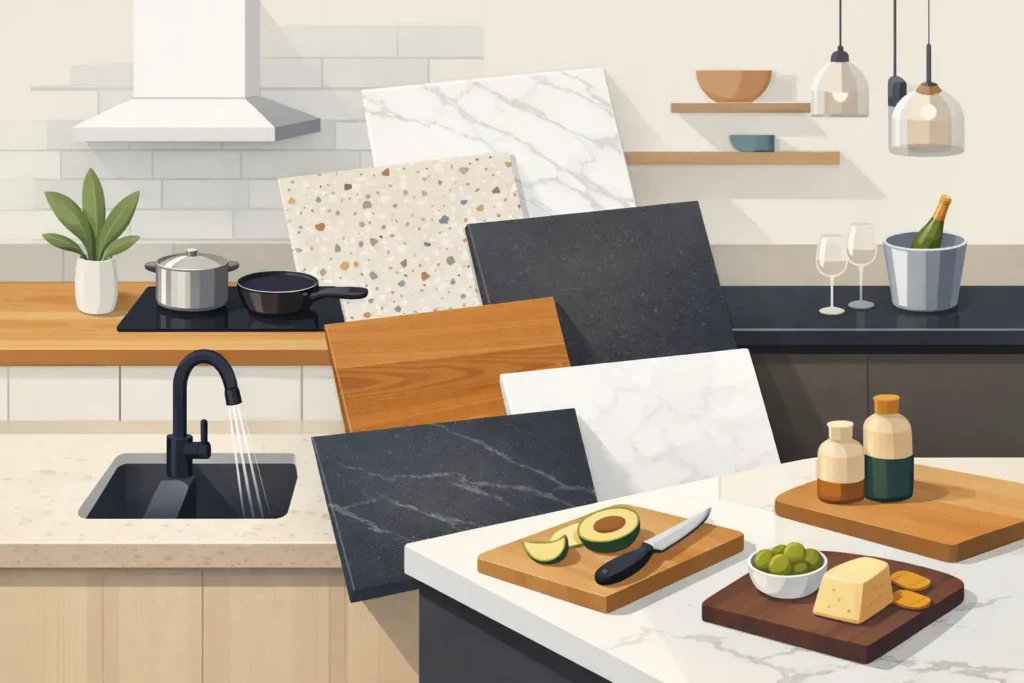
A tired worktop can make an otherwise well-kept kitchen feel dated. Scratches around the sink, worn laminate edges and a colour that no longer works with the cabinets often create the impression that a full refit is needed. In reality, the best worktop makeover ideas focus on changing the surface with care, rather than removing a kitchen that is still structurally sound.
A professionally refinished worktop can bring a cleaner, more contemporary look to the room while avoiding the upheaval of ripping out units, plumbing and splashbacks. The right choice depends on the condition of the existing surface, how the kitchen is used and the finish you want to live with every day.
What makes a worktop makeover worthwhile?
A successful makeover is more than a new colour. It should make the kitchen easier to maintain, complement the rest of the room and stand up to the daily demands of cooking, cleaning and family life. This is why surface preparation, coating choice and application standards matter just as much as the finished appearance.
Worktop restoration is particularly appealing where cabinets are still in good condition but the work surface lets the room down. It can also be an intelligent option for landlords, developers and commercial property owners who need to refresh a space with minimal downtime. Rather than treating every worn surface as waste, professional refinishing gives it a considered second life.
8 best worktop makeover ideas to consider
1. Create a stone-effect finish with spray granite
Spray granite resurfacing is one of the most effective ways to give an existing worktop a premium, stone-inspired appearance without replacing the whole countertop. The finish can add depth and subtle texture that plain laminate or older composite surfaces may lack.
It works particularly well in kitchens where homeowners want the visual weight of granite or engineered stone but prefer to retain their existing layout. Colours can be selected to suit warm timber cabinetry, crisp white doors, deep blue units or modern neutral schemes. A carefully chosen fleck and base tone can make the finished surface feel integral to the design rather than like an afterthought.
2. Use a soft grey or greige to modernise dated units
Not every worktop needs to be dark or dramatic. Mid-tone greys and greige shades are enduring choices because they sit comfortably between cool and warm colour palettes. They can soften the appearance of oak-effect cabinets, update cream doors and work well alongside brushed metal or black fittings.
The benefit of a softer neutral is flexibility. If you later change wall colours, cabinet handles or accessories, the worktop is less likely to clash. This makes it a sensible choice for rental properties and homes where the kitchen needs to appeal to a broad range of tastes.
3. Add contrast with a deep charcoal worktop
A charcoal, graphite or near-black worktop can introduce definition to a pale kitchen. Against white, light grey or sage-green cabinetry, the contrast creates a sharper, more architectural look. A stone-effect spray finish can prevent the colour from appearing flat, giving the surface a more natural variation.
There is a practical consideration here: very dark plain surfaces can show dust, water marks and crumbs more readily, depending on the light in the room. A subtly textured or flecked finish is often a more forgiving option for busy family kitchens while retaining the desired depth of colour.
4. Coordinate the worktop and splashback
The worktop rarely sits in isolation. Extending a complementary finish onto a splashback can make a modest kitchen feel more purposeful and high-end. This does not always mean matching every surface exactly. A tonal pairing, such as a warm grey worktop with a lighter grey splashback, can create a balanced and less clinical result.
For kitchens with existing tiled splashbacks, professional spraying can also help remove visual clutter created by dated tile colours or busy grout lines. The result is a more cohesive backdrop that allows cabinetry, lighting and the worktop finish to work together.
5. Pair a refreshed worktop with resprayed cabinets
If cabinet doors are sound but the overall colour scheme feels tired, combining a worktop makeover with a cabinet respray can achieve a complete kitchen transformation without a full replacement. This approach lets you choose a considered contrast, such as deep green cabinetry with a warm stone-effect worktop, or soft off-white doors with a darker granite-inspired surface.
The key is proportion. A busy worktop often looks best with a calmer cabinet colour, while a more understated worktop gives you freedom to be bolder with painted units. Samples and a home consultation are useful here, as lighting can change how colours appear from one kitchen to another.
6. Refresh worn edges and awkward cut-outs
It is often the small details that reveal a worktop’s age. Chipped edges, tired joins and areas around the hob or sink can draw the eye even when the main surface still looks reasonable. A professional resurfacing project addresses the worktop as a whole, with meticulous preparation before the finish is applied.
This is especially valuable for kitchens with unusual shapes, fitted breakfast bars or integrated sections that would be costly and disruptive to replace. Retaining the existing fit can preserve the kitchen’s practical layout while delivering a far more polished appearance.
7. Choose a finish that suits how the kitchen is used
A worktop in a low-use flat has different demands from one in a family home, café or holiday let. For busy spaces, the priority is a durable finish that is straightforward to clean and designed for regular use. In a kitchen with lots of natural light, the sheen level also deserves thought, as a high-shine surface can reflect more light and show marks differently from a softer finish.
A professional will advise on the most suitable system for the material and setting rather than offering a one-size-fits-all answer. Honest guidance matters because the best-looking option is only worthwhile if it suits the way the space actually functions.
8. Continue the finish into a utility room or bar area
For a more considered property-wide update, carry a related worktop finish into adjacent areas. A utility room, boot room, home bar or office kitchenette can be refreshed in a complementary colour, creating consistency without making every room identical.
This is particularly effective in open-plan homes and commercial spaces, where connected surfaces are visible together. It can also help developers and property managers achieve a coherent finish across several kitchens or units while reducing unnecessary replacement work.
Choosing the right colour and texture
Before settling on a finish, look at the kitchen’s fixed elements. Flooring, wall tiles, appliance colours and natural light will all influence whether a worktop feels warm, cool, bold or understated. A sample viewed only under showroom lighting may look very different beside your own cabinets and windows.
Consider the scale of pattern too. Fine granite-style flecks tend to feel timeless and practical, while a stronger pattern can become a focal point. Neither is automatically better. A compact kitchen may benefit from a lighter, quieter surface, whereas a large kitchen island can carry a richer colour or more distinctive texture.
It is also wise to think beyond current trends. A worktop is a hard-working surface, so choosing a colour you will still appreciate after a few seasons is usually more valuable than chasing a short-lived look.
Why professional preparation changes the result
The visible finish is only one part of a quality worktop transformation. Proper cleaning, repair, masking and surface preparation are essential to achieving an even, durable result. Rushing these stages can leave imperfections visible or compromise how the coating performs over time.
Professional spray application creates a controlled, factory-quality appearance that is difficult to achieve through short-term cosmetic fixes. The work is planned around the existing surface, its condition and the required finish, with attention paid to edges, joins and areas of high use. This is where experienced craftsmanship delivers value: the aim is not simply to cover a surface, but to transform it with a finish designed for everyday living.
When resurfacing is the right choice
Resurfacing is often suitable when the worktop is stable, securely fitted and free from serious structural damage. It is a strong option for homeowners who like their kitchen layout but want a more luxurious appearance, as well as for commercial clients seeking a smart update with less disruption.
However, every surface should be assessed individually. Significant water damage, movement in the substrate or unsuitable existing materials may affect what can be achieved. A professional consultation provides the clearest route to an informed decision, including colour options, finish expectations and the preparation required.
The most effective makeover is the one that respects what already works in your kitchen and improves what does not. With the right finish, careful preparation and an experienced specialist, an old worktop can become the detail that makes the whole room feel new again.