
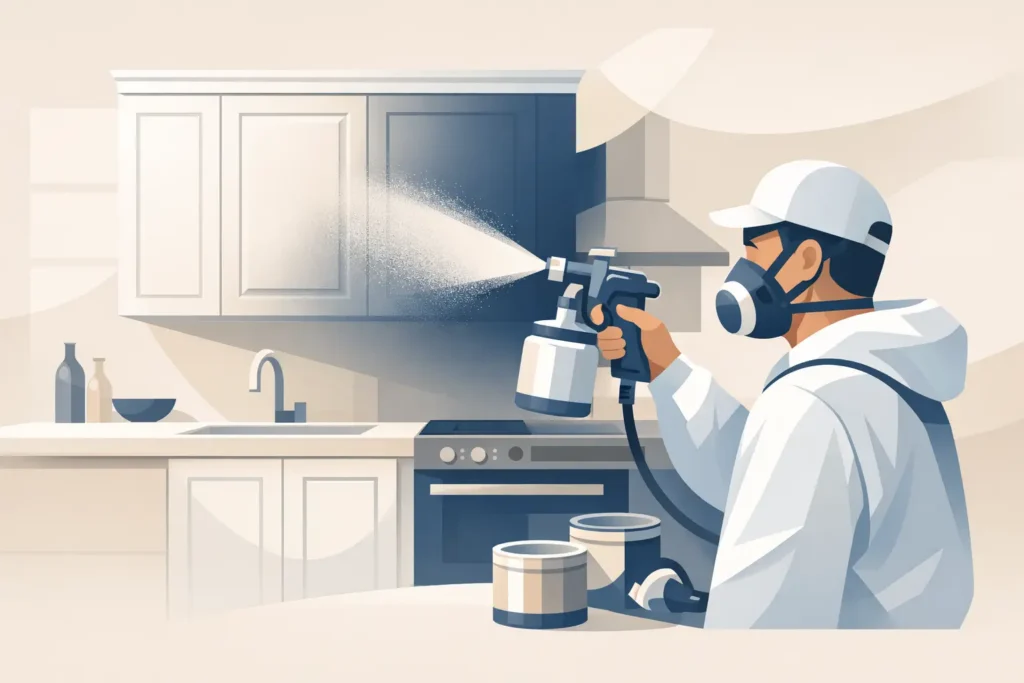
A kitchen can feel dated long before it stops working. Gloss doors may have lost their shine, a once-popular timber effect may no longer suit the rest of the home, or the colour may simply make the room feel darker than it should. Spraying kitchen cabinets offers a refined alternative to a full refit, transforming sound existing units with a smooth, factory-quality finish while avoiding much of the disruption associated with replacement.
For homeowners, landlords and commercial property owners, the appeal is clear: retain a kitchen layout that works, update the look completely, and invest in the surfaces people see and use every day. The result depends on far more than choosing a new colour, however. Professional preparation, suitable coatings and careful application are what turn a respray into a lasting surface transformation.
What does spraying a kitchen involve?
Kitchen spraying is a specialist refinishing process used to update cabinet doors, drawer fronts, end panels, plinths and, where appropriate, other fixed elements. Rather than removing and replacing the full kitchen, the existing surfaces are assessed, prepared and professionally spray finished in the chosen colour and sheen.
This is particularly valuable when cabinet carcasses remain structurally sound. Replacing a kitchen because the doors are tired can create unnecessary mess, waste and expense, especially where worktops, appliances, flooring and plumbing are all still in good condition. A carefully planned respray lets the kitchen take on a completely different character without changing the practical layout.
The finish can be selected to complement a modern, classic or contemporary interior. Soft neutral shades can make a compact kitchen feel calmer and lighter, while deeper colours can add contrast and a more tailored feel. Bespoke colour matching is also useful where cabinets need to work with existing tiles, flooring, worktops or painted features elsewhere in the home.
Why preparation determines the finish
The quality of a sprayed kitchen is decided well before the final coat is applied. Kitchen cabinets are exposed to cooking residue, fingerprints, moisture, cleaning products and regular contact around handles and drawer edges. If these surfaces are not properly cleaned, repaired and prepared, a new coating has little chance of performing as it should.
A professional process begins with an assessment of the cabinet material and its condition. Laminate, MDF, timber, vinyl-wrapped doors and previously painted surfaces can all require a different approach. Any chips, dents, loose sections or damaged edges must be addressed before finishing, not disguised beneath a fresh colour.
Thorough cleaning and degreasing are essential, particularly around cooking areas. The surface is then carefully keyed to create the right foundation for adhesion. Primers and coatings are selected to suit the substrate and the demands of a kitchen environment. Masking is equally important, protecting worktops, walls, appliances and surrounding finishes so the completed room looks precise rather than simply repainted.
This attention to preparation is what gives professionally sprayed cabinetry its even appearance. There should be no brush marks, roller texture or uneven build-up around detailed edges. Instead, the aim is a consistent finish that feels considered from every angle.
Spraying kitchen cabinets versus replacing them
A full kitchen replacement has its place. If units are swollen from water damage, poorly fitted, structurally compromised or no longer meet the needs of the property, a respray may not be the right answer. Honest assessment matters, because refinishing works best when it is applied to a sound base.
Where the layout is practical and the cabinetry is in good condition, spraying can be a highly effective option. It can reduce the need to disturb floors, plumbing, electrics and adjoining décor, which is particularly helpful in occupied homes, rental properties and commercial spaces where downtime needs to be kept under control.
It also allows more freedom in the visual design. A tired cream kitchen can become a crisp warm white, a muted sage, a charcoal statement or a colour matched to an interior scheme. Doors that would be expensive to replace with bespoke alternatives can often be transformed while retaining their original proportions and detailing.
The trade-off is that cabinet condition cannot be ignored. A premium finish will enhance the underlying furniture, but it cannot resolve major structural faults. This is why a proper consultation is more useful than a one-size-fits-all promise.
Choosing the right colour and sheen
Colour has the greatest immediate impact, but sheen changes the way that colour performs in the room. Matt and low-sheen finishes can create a contemporary, understated look and work well with natural textures, stone-effect worktops and timber accents. Satin offers a gentle reflective quality that can suit a wide range of homes. Higher-sheen finishes create more visual light but may show marks more readily in busy family kitchens.
The best choice depends on the room itself. North-facing kitchens can benefit from warmer whites and softer neutrals, while rooms with generous natural light can carry deeper greens, blues or darker grey tones confidently. Cabinet colour should also be considered alongside the worktop, splashback, handles and flooring rather than selected in isolation.
A two-tone scheme can be particularly effective. Darker base units paired with lighter wall cabinets add definition without making the room feel enclosed. Alternatively, spraying an island or pantry unit in a contrasting shade can create a focal point while keeping the rest of the kitchen restrained.
At Spray Granite Specialists, colour guidance is approached as part of the wider transformation. The purpose is not simply to follow a passing trend, but to choose a finish that feels right for the property and remains enjoyable to live with.
Can worktops and other surfaces be transformed too?
Cabinet spraying can make a substantial difference on its own, but it is often considered alongside other visible kitchen surfaces. An outdated worktop, tired tile splashback or poorly matched feature wall can prevent new cabinet colours from having their full effect.
Spray granite worktop resurfacing can provide a durable, modern stone-style appearance without removing the existing worktop where it is suitable for restoration. This can be a practical choice when a homeowner wants a coordinated kitchen transformation while avoiding the upheaval of replacement work. Splashbacks, tiles and selected surrounding surfaces may also be suitable for specialist refinishing, depending on their material and condition.
A joined-up approach matters. For example, warm greige cabinets may sit beautifully with a soft, lightly textured worktop finish, while deep navy cabinetry can be balanced with a lighter splashback and brushed metal hardware. The goal is a kitchen that looks intentionally designed rather than updated in stages.
Everyday durability and aftercare
A kitchen is not a display room. Cabinet surfaces need to cope with regular use, and a professional finish should be easy to maintain with sensible care. Once the coating has cured fully, routine cleaning is typically straightforward: use a soft cloth and mild cleaning products, and avoid abrasive pads or harsh chemical cleaners that may dull or damage the finish over time.
Protecting surfaces from unnecessary impact is sensible, particularly around door edges and handles. Spills should be wiped promptly, and moisture should not be left to sit around joins or damaged areas. These are simple habits, but they help preserve any kitchen finish, whether sprayed or newly manufactured.
For landlords and commercial clients, durability is especially relevant. A well-planned respray can help refresh kitchens between tenancies or modernise hospitality and workplace spaces without the extended closure or disruption that replacement can bring. The key is selecting the right coating system and preparation method for the setting, not treating every project as identical.
Is professional kitchen spraying right for your property?
The best candidates are kitchens with solid, usable units and a layout worth keeping. If the room functions well but looks tired, dated or disconnected from the rest of the property, spraying can offer a dramatic visual change with far less upheaval than a full renovation.
A professional consultation should consider the cabinet material, existing damage, colour ambitions, associated surfaces and how the kitchen is used. That is the point at which the realistic options become clear. A premium result is built on sound advice as much as skilled application.
A kitchen does not need to be stripped out to feel new again. When the existing foundations are right, careful restoration can create a lighter, more luxurious and more personal space that is ready for everyday life.