
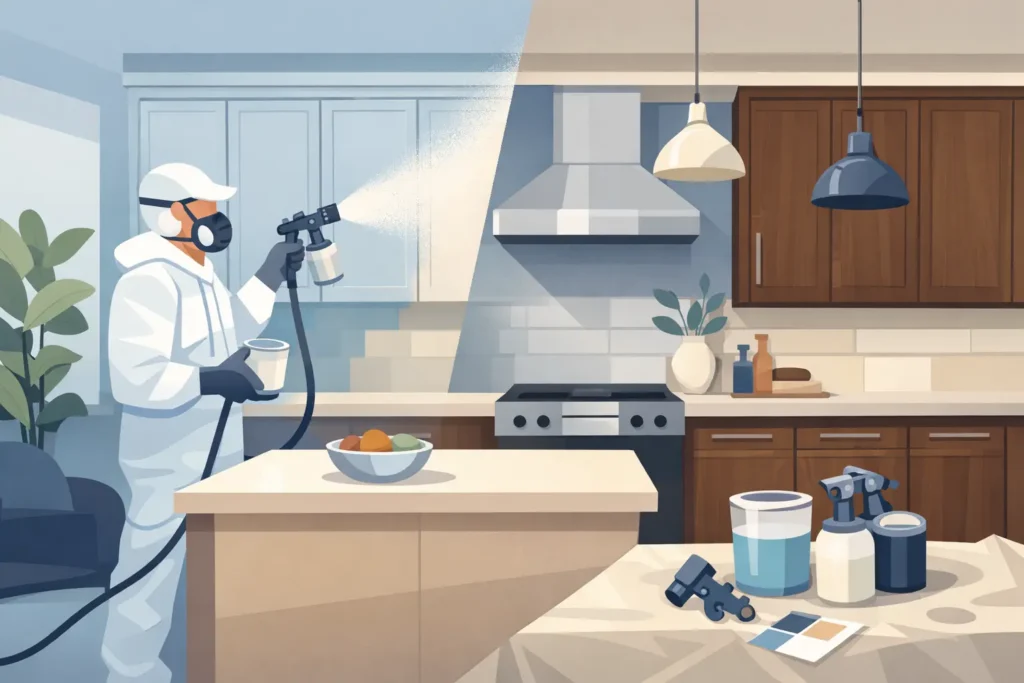
A kitchen can be structurally sound yet still make the whole home feel dated. Perhaps the cabinet doors are a tired cream, the finish has dulled around the handles, or a previous colour choice no longer suits the room. A professional kitchen respray changes the visible surfaces that define the space, without the upheaval of taking out units that still work perfectly well.
For homeowners, landlords and property professionals, this is often the point at which restoration becomes a genuinely practical alternative to replacement. The result is not a cover-up or a short-term refresh. With the right preparation, coating system and application, existing cabinetry can be given a smooth, durable finish with the refined look of a newly manufactured kitchen.
What a professional kitchen respray involves
Kitchen respraying is the specialist refinishing of existing cabinet doors, drawer fronts, end panels, plinths and, where suitable, fixed elements such as cornices or pelmets. It is designed for kitchens that are sound and functional but no longer reflect the standard, colour or style their owners want.
The lasting quality of the finish comes from preparation, not simply from the final coat. Before spraying begins, surfaces need to be assessed for wear, damage, movement and suitability. Doors and components are carefully cleaned and degreased to remove the everyday build-up that kitchens naturally collect. Areas requiring repair are addressed, surfaces are prepared for adhesion, and surrounding walls, worktops and appliances are protected with care.
Only then is a professional coating system applied in controlled stages. This method creates an even finish with none of the brush marks, roller texture or inconsistent coverage often associated with painting cabinetry by hand. It is the detail in the preparation, masking and application that gives a resprayed kitchen its factory-quality appearance.
Why respraying can make more sense than replacing
A full kitchen replacement can involve much more than new cabinets. Units have to be removed, plumbing and electrics may need altering, walls and flooring can require remedial work, and the room may be unusable for an extended period. Where cabinet carcasses remain solid, all of that disruption may be unnecessary.
A kitchen respray retains the existing layout and the useful structure behind it, while changing the part everyone sees. It can make a dark kitchen feel lighter, bring an older room in line with a new extension or flooring scheme, or give a rental property a more appealing, well-maintained appearance between tenancies.
There is also a waste consideration. Replacing usable units creates material waste and can add avoidable work to a renovation project. Restoration is not the right answer for every kitchen, but when the foundations are sound, refinishing them is a considered way to achieve a significant visual change.
The trade-off is straightforward: respraying improves and protects the surfaces you already have, but it will not correct poor kitchen design, severely damaged cabinetry or units affected by persistent water ingress. Honest assessment matters. If the doors, panels and structure are in suitable condition, respraying can offer exceptional value. If they are not, a specialist should explain why before any work is agreed.
Choosing a colour and finish that will still feel right
Colour selection is where a kitchen transformation becomes personal. Soft whites, warm neutrals and greige shades can brighten a compact room without making it feel stark. Deep blues, greens and charcoals create a more tailored, architectural look, especially when paired with timber, stone-effect worktops or brushed metal handles.
The best choice depends on more than current trends. Natural light, wall colour, flooring, worktops and the size of the room all influence how a shade will read. A dark colour can look striking in a light-filled open-plan kitchen, while a lighter tone may be the more practical choice in a smaller space with limited daylight.
Finish is equally important. A low-sheen or satin appearance is popular because it feels contemporary while remaining practical for everyday use. A higher sheen can create a more formal look and reflect additional light, but it may show fingerprints or surface imperfections more readily. An experienced spray specialist can guide the decision, including bespoke colour matching where a particular interior scheme calls for it.
New handles can complete the effect, but they should be considered early. Changing handle positions can leave old holes to repair and may require careful measuring to maintain a clean, balanced result. Sometimes retaining quality existing hardware is the right choice; in other kitchens, updated handles provide the finishing detail that brings the new colour to life.
Which kitchen surfaces can be resprayed?
Cabinet doors, drawer fronts and external panels are the most common elements, but a complete visual update often considers the kitchen as a whole. Plinths, cornices, pelmets and side panels can usually be incorporated so the finish looks intentional rather than pieced together.
Worktops need a different approach. They face heat, water, cleaning products and constant abrasion, so they should only be refinished with a coating system designed for that level of use. Spray granite worktop resurfacing can provide a durable, decorative stone-style finish where the existing worktop is suitable, helping cabinets and work surfaces feel like part of one considered design.
Tiles and splashbacks may also be candidates for specialist refinishing, depending on their condition and location. The key is assessing each material individually. A good transformation does not force every surface into the same solution. It identifies what can be restored professionally and where another option may be more appropriate.
Durability depends on preparation and everyday care
Kitchen cabinetry is used hard. Doors are opened with damp hands, drawers are knocked by chairs and bags, and surfaces are exposed to cooking residue and regular cleaning. Premium professional coatings are selected to cope with normal domestic use, but no finish is indestructible. Sensible care protects the appearance for longer.
After the recommended curing period, cleaning should be simple and gentle. A soft cloth with mild cleaning products is generally sufficient for routine marks. Abrasive pads, harsh solvents and aggressive degreasers can dull or damage painted finishes, regardless of how they were applied. It is also wise to wipe up spills promptly and avoid repeatedly knocking handles or door edges with hard objects.
These are not demanding rules. They are the same sensible habits that help any premium kitchen retain its finish. When a surface is professionally prepared and looked after, it remains easy to clean, hygienic and well suited to the demands of a busy home.
What to expect from the process
A reputable respray project begins with a consultation, not a colour chart pushed through the letterbox. The existing kitchen should be inspected, the desired outcome discussed, and practical questions answered before work is booked. This is the time to talk through colours, sheen levels, repairs, hardware and any surfaces that need separate treatment.
On site, careful protection is essential. Kitchen respraying is skilled finishing work carried out in an occupied property, so the surrounding area must be masked and managed methodically. Depending on the project, doors may be removed for preparation and spraying, while fixed sections are refinished in place under controlled protection.
Timescales vary according to kitchen size, condition, the number of components and the coatings specified. It is worth allowing the process to be done properly rather than treating it as a rushed cosmetic job. The difference is visible in the edges, the consistency of the colour and the way the finish performs after the first few weeks of real use.
With more than 22 years of professional spray finishing experience, Spray Granite Specialists approaches each project with that level of care: meticulous preparation, premium materials and clear advice about what will achieve the best result for the property.
Is your kitchen a good candidate for respraying?
The strongest candidates are kitchens with solid cabinet carcasses, doors that close correctly and surfaces that are worn, dated or simply the wrong colour. Shaker kitchens, slab-fronted doors and many MDF, laminate and previously painted surfaces can often be assessed for refinishing.
A consultation is especially valuable where there is peeling, swelling, heat damage, loose edging or signs of water damage around sinks and appliances. Those issues do not automatically rule out a respray, but they need addressing honestly. A quality finish should enhance a kitchen that is ready to be transformed, not hide problems that will soon return.
If your kitchen still works for the way you live but no longer feels like your kitchen, restoration may be the change that makes the whole room feel new again. Start with an expert assessment, choose a colour you will enjoy living with, and let the condition of the existing surfaces guide the best next step.