
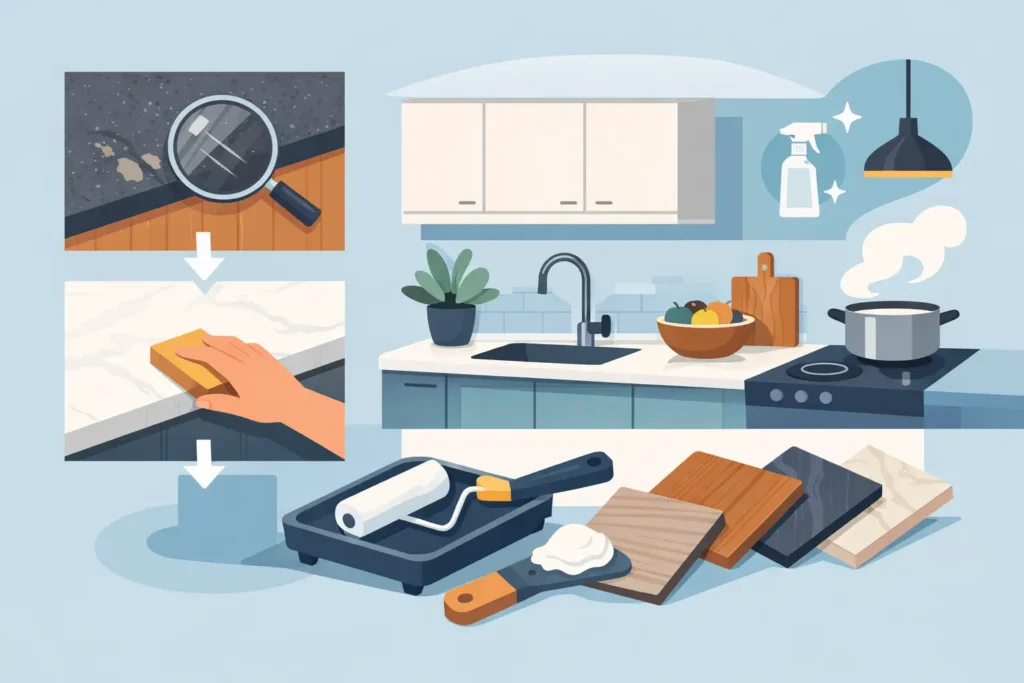
A tired kitchen rarely needs to be stripped back to bare walls to feel completely new. This surface transformation guide for kitchens looks at the elements that make the biggest visual difference – cabinets, worktops, tiles and splashbacks – and explains when professional spray finishing can be a practical alternative to replacement.
For many homeowners, landlords and property professionals, the issue is not a poorly planned kitchen. It is dated colour, worn finishes, stubborn staining or surfaces that no longer suit the rest of the property. Restoring suitable existing materials can retain a kitchen’s layout and function while creating a cleaner, more considered and more luxurious result.
Start with the condition, not the colour
The most successful transformations begin with an honest assessment of the surfaces already in place. A kitchen may look beyond saving because doors are yellowed, worktops are marked or tiles belong to another decade. Yet appearance alone does not decide whether a surface can be refinished.
The key question is whether the substrate is stable and sound. Cabinet doors should be structurally secure, worktops should not have extensive swelling or movement, and tiled areas should be firmly bonded. Professional restoration is not about covering up underlying failure. It is about preparing a suitable surface meticulously, then applying a finish designed for its location and everyday use.
This distinction matters. A sound kitchen with a dated appearance is often an excellent candidate for transformation. A kitchen with serious water damage, loose materials or failed components may need repair work before refinishing can be considered. Good advice should always reflect the condition of the individual space rather than promising one answer for every kitchen.
The surfaces that change a kitchen most
Cabinet respraying creates the strongest visual shift
Cabinetry usually occupies the largest visual area in a kitchen, so its colour and finish set the tone for the whole room. Dark timber-effect doors can feel heavy, high-gloss cream can date a scheme, and scratched painted units can make an otherwise well-kept space feel neglected.
A professional cabinet respray can bring those units into a contemporary palette without changing their footprint. Soft whites, warm greys, deep greens, refined blues and bespoke colour matches can all change the character of the room. The right choice depends on natural light, the size of the kitchen, flooring, handles and the atmosphere the owner wants to create.
Finish matters as much as colour. A subtle satin surface often suits a calm, modern kitchen, while a low-sheen or more pronounced finish may work better for a particular design. A specialist can guide this choice and ensure that the coating system is appropriate for kitchen use, where doors face regular handling, moisture and cleaning.
Worktop resurfacing can redefine the scheme
A worn worktop draws attention for all the wrong reasons. Burns, stains, tired patterns and dated colours can undermine newly refreshed cabinetry, even when the worktop is still structurally functional.
Spray granite worktop resurfacing can create the visual depth and texture associated with a premium stone-style finish while retaining the existing worktop beneath. It is particularly effective where replacement would involve removing sinks, disturbing splashbacks or creating unnecessary disruption across an otherwise usable kitchen.
There are practical considerations. Worktops receive daily wear from food preparation, appliances, water and cleaning, so preparation and coating quality are essential. A professional assessment will also consider the existing material, its condition and how the kitchen is used. A busy family kitchen, rental property and low-use second home may have different priorities, but all need a finish selected and applied for real-world performance.
Tiles and splashbacks should support the new design
Tiles are durable, but their colour and pattern can anchor a kitchen in the past. Replacing them can be noisy, dusty and disruptive, especially where tiles run behind appliances or meet fitted units. Provided they are secure and in suitable condition, professionally refinished tiles can give the room a far more cohesive appearance.
A refreshed splashback is especially valuable when cabinets and worktops have already been updated. Instead of three competing finishes, the kitchen can be planned as one scheme: cabinetry that provides the main colour, worktops that add texture and splashbacks that quietly tie the elements together.
For areas near sinks and hobs, the specification must reflect the demands of heat, moisture and regular cleaning. This is where professional surface preparation and suitable premium coatings make the difference between a finish that merely looks smart at first and one designed to stand up to daily life.
A surface transformation guide for kitchens: choosing colour with confidence
Colour samples can look very different under showroom lighting, a cloudy afternoon or warm under-cabinet lights. Before committing to a kitchen palette, consider the room at the times it is most often used. North-facing kitchens often benefit from warmer neutrals, while large bright spaces can carry darker cabinetry with confidence.
There is no rule that says every transformed kitchen must be pale. Lighter finishes can make compact kitchens feel open and fresh, but deeper colours can add depth and a tailored, high-end feel when balanced with lighter worktops, walls or flooring. For landlords and developers, timeless neutral shades may offer broader appeal. For a long-term home, a more personal colour can be the right decision.
Bespoke colour matching is useful when a kitchen needs to work with an existing feature, such as a statement wall, heritage paint colour or carefully selected flooring. The aim is not to follow a short-lived trend. It is to create a finish that feels considered throughout the room.
Why preparation is the part homeowners do not see
The finished result may be what everyone notices, but the lasting quality of a spray-finished kitchen is built long before the final coat is applied. Thorough cleaning, degreasing, repairs where appropriate, careful masking and controlled preparation all affect adhesion, smoothness and durability.
This work is particularly important in kitchens. Cooking residues can sit invisibly on cabinet fronts and tiles. Silicone edges, handles, hinges and adjacent surfaces need careful management. A factory-quality appearance comes from controlling these details rather than treating spray finishing as a quick coat of paint.
With more than 22 years of professional spray finishing experience, Spray Granite Specialists approaches each project as a surface system rather than a colour change. The existing material, level of use, location and desired finish all inform the preparation and coating process.
Restoration versus replacement: the practical trade-off
Replacement is sometimes necessary, especially where units or worktops have failed structurally. But where surfaces are sound, it can also introduce costs and disruption that go far beyond the item being replaced. New worktops may affect sinks, taps, wall finishes and appliances. New cabinetry can lead to changes in flooring, electrics and plumbing.
Surface restoration keeps the focus on what the kitchen needs rather than what can be removed. It can help reduce downtime in family homes, rental properties, hospitality settings and commercial premises, where a lengthy refurbishment has a direct impact on daily use.
The trade-off is simple: refinishing depends on good existing foundations and skilled application. It is not a shortcut around structural problems. When the conditions are right, however, it is a considered way to achieve a high-end transformation without replacing materials that are still serving their purpose.
Planning a transformation that will still feel right in years to come
A kitchen transformation works best when it is planned as a whole, even if only selected surfaces are being refinished. Consider which element should lead the scheme. If the worktop has a distinctive spray granite finish, quieter cabinet colours may give it room to stand out. If cabinetry is the feature, a restrained splashback can keep the result balanced.
Also think about the details that will remain. Handles, taps, light fittings and flooring influence whether a new surface feels integrated or isolated. Sometimes a change in handles is all that is needed alongside a cabinet respray; in other kitchens, retaining original brassware or flooring creates a welcome contrast with a more contemporary finish.
A professional home consultation provides the chance to assess these choices in the actual space, under its own light and alongside its existing materials. It is the most reliable way to decide whether restoration is suitable and what finish will deliver the transformation you have in mind.
The best kitchen updates do not always begin with demolition. They begin by looking carefully at what is already there, recognising its potential and giving well-made surfaces the finish they deserve.